Select Your State / Territory
CPCWHS1001 is a single national unit, but each state has its own card design, regulator and issuing process. Select your state below and the workbook will show your state-specific profile.
What Is the White Card?
The White Card - formally known as the CPCWHS1001 Construction Induction Training - is a unit of competency from the Construction, Plumbing and Services Training Package. It is Australia's baseline safety qualification for the construction industry, required by law before you can set foot on any construction site in a working capacity.
The certificate proves that a worker understands their legal obligations under Work Health and Safety (WHS) legislation, can identify common construction hazards, knows how to use and maintain personal protective equipment (PPE), and understands what to do in an emergency or incident.
It is not a trade qualification. It does not replace specialised high-risk licences for work such as scaffolding, dogging, or operating plant. It is the entry-level safety requirement that every worker, apprentice, visitor, and site supervisor must hold before they can legally access a construction site.
Course Learning Materials
The CPCWHS1001 course covers eight core topic areas specified in the national Construction, Plumbing and Services Training Package (CPC). The content below reflects what you will study and be assessed on. Topic names, elements, and performance criteria align with the unit as published on training.gov.au - the national register of VET.
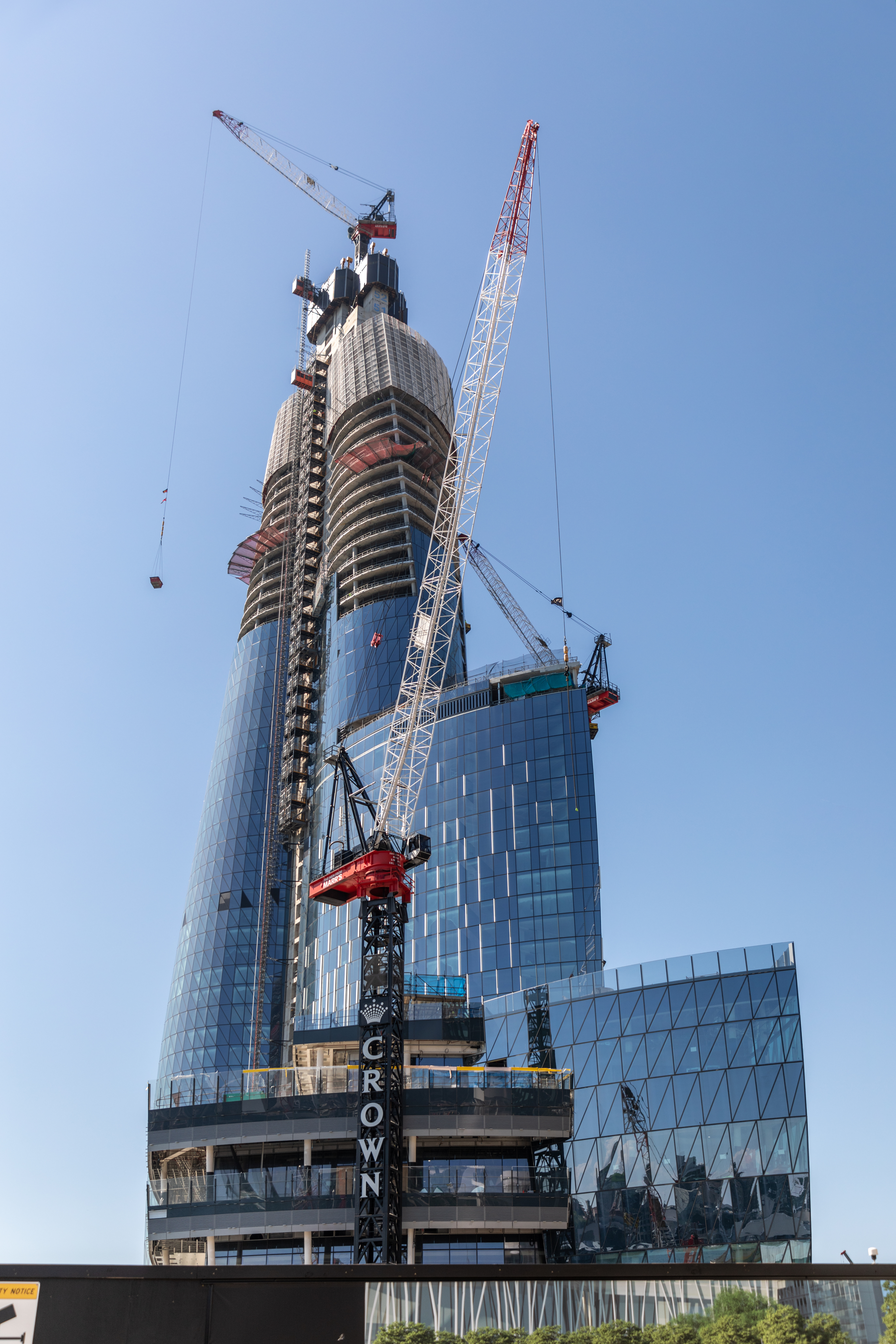

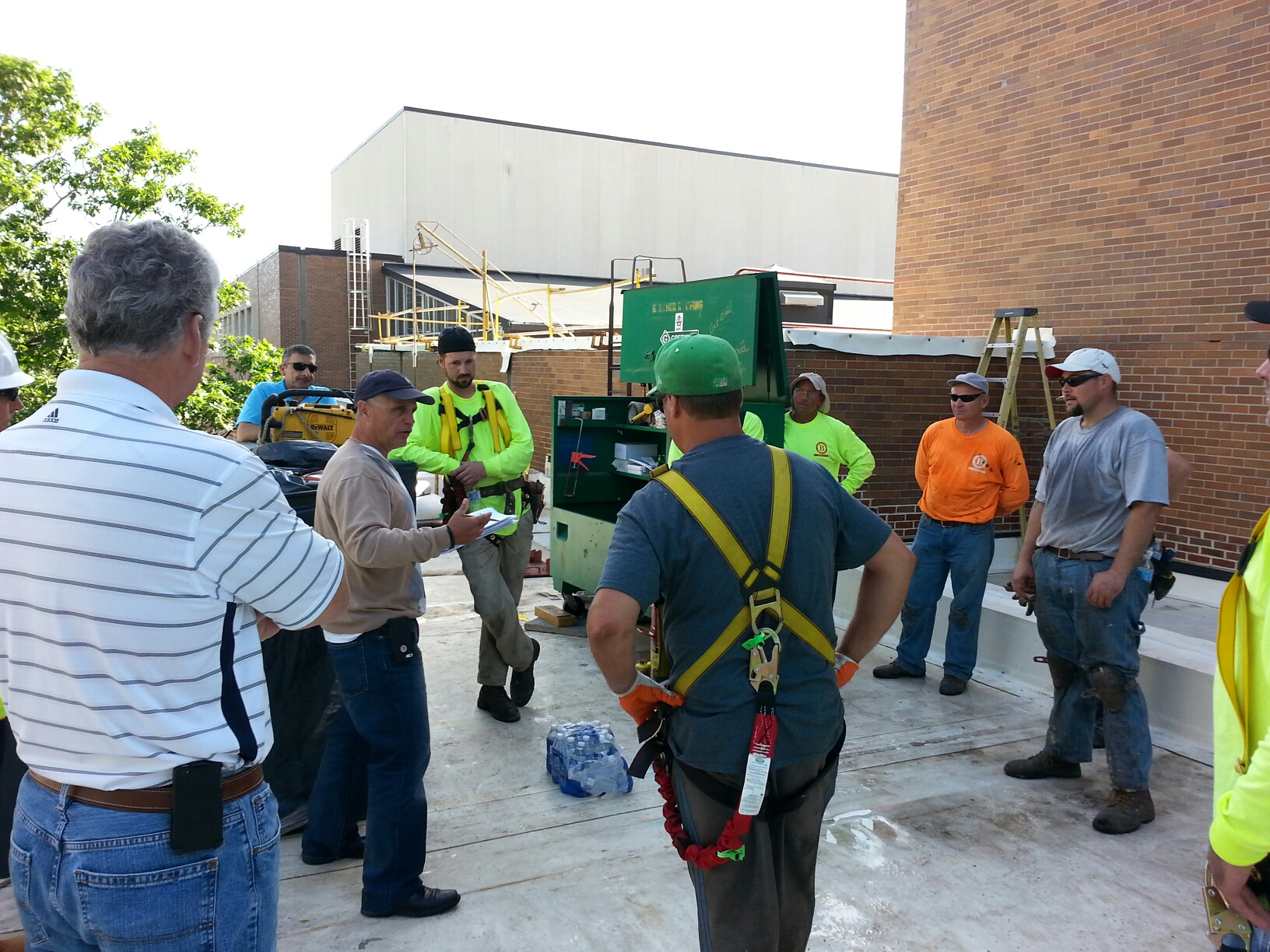

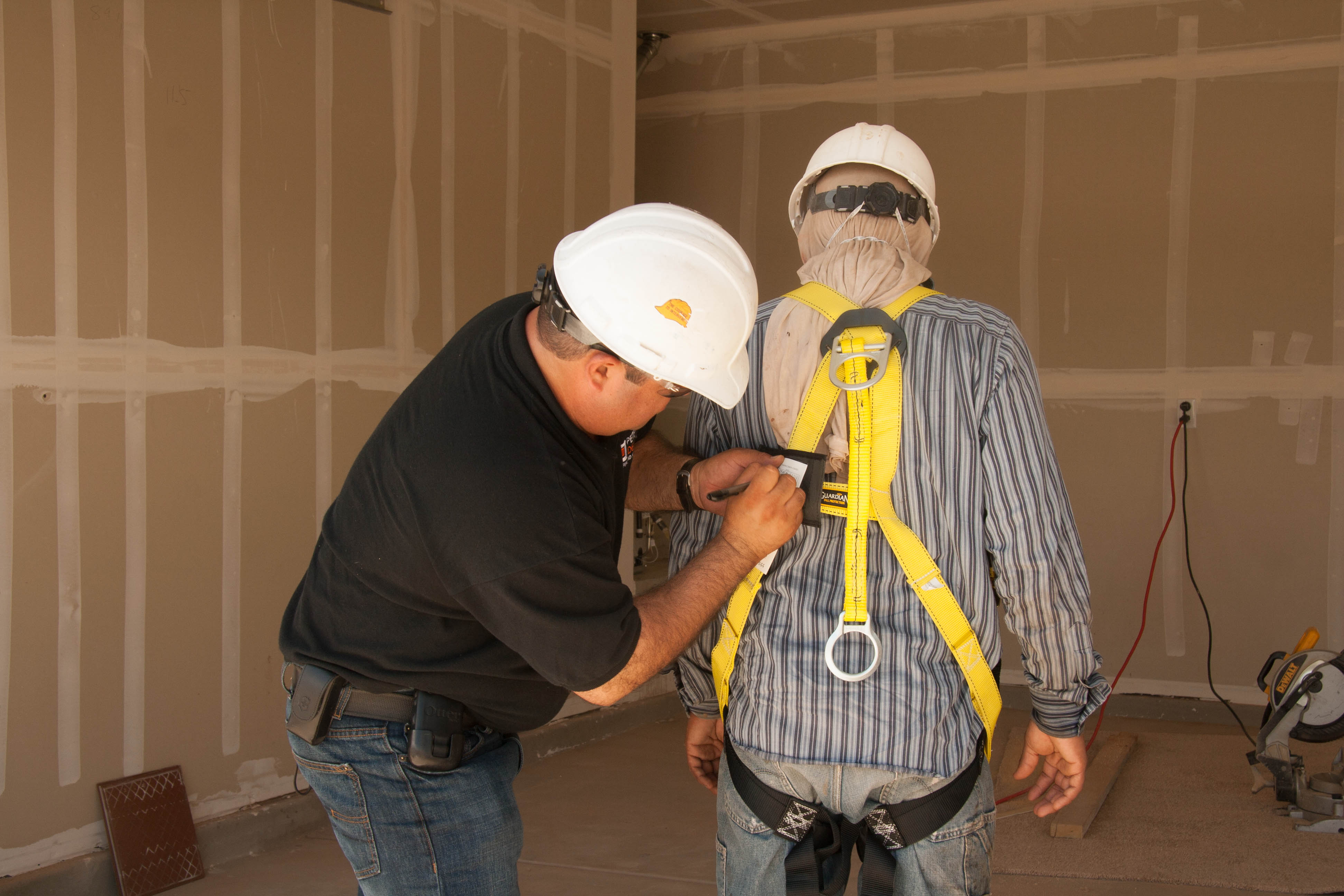
Photos via Wikimedia Commons (CC BY-SA / CC BY / Public Domain): Dietmar Rabich, Virtual Wolf, U.S. Dept of Labor (OSHA), Wpcpey.
Australian Work Health and Safety Legislation
This module establishes the legal framework that governs every construction site in Australia. You will study the Work Health and Safety Act 2011 (the model WHS Act) and understand how it has been adopted across most states and territories. The module explains the concept of a Person Conducting a Business or Undertaking (PCBU) - who they are, what duties they hold, and how those duties flow down to workers and other persons at the workplace.
Key topics include: the primary duty of care; reasonably practicable test; duties of designers, manufacturers, importers, and suppliers; duties of workers and other persons at the workplace; the role of Health and Safety Representatives (HSRs); and the powers of WHS inspectors and regulators. You will also study enforcement mechanisms including improvement notices, prohibition notices, and penalty structures for serious breaches.
- WHS Act 2011 (model law) - adopted in most jurisdictions
- Victoria uses the Occupational Health and Safety Act 2004
- PCBU primary duty: ensure health and safety of workers, so far as is reasonably practicable
- Workers must take reasonable care for their own safety and the safety of others
- HSRs represent work groups and can issue Provisional Improvement Notices (PINs)
Construction Industry Hazards and Risk Management
This is one of the most practical modules in the course. You will learn the hierarchy of controls - the nationally mandated method for managing workplace risks - and how to apply it specifically to construction hazards. The hierarchy ranks controls from most effective (elimination) to least effective (personal protective equipment), and you must demonstrate you understand why higher-order controls are always preferred.
Common construction hazards examined include: working at heights; mobile plant and equipment; electricity (overhead lines, buried cables, temporary supplies); silica dust from cutting or grinding concrete and masonry; asbestos in older buildings; manual handling and musculoskeletal risks; noise-induced hearing loss; heat and UV exposure; slips, trips, and falls on the same level; and trenching and excavation collapses.
You will also study the Safe Work Method Statement (SWMS) - what it is, when one is required (high-risk construction work), who prepares it, and what obligations workers have when a SWMS is in place at their workplace.
- Hierarchy: Eliminate - Substitute - Isolate - Engineering - Administrative - PPE
- SWMS is mandatory for all 19 categories of high-risk construction work
- Silica exposure is a leading cause of preventable occupational disease in construction
- Falls from heights are the leading cause of construction fatalities in Australia
- Risk assessment must be conducted before commencing high-risk work
Personal Protective Equipment (PPE)
This module covers the selection, correct fitting, maintenance, inspection, storage, and disposal of PPE commonly used on Australian construction sites. Critically, you will understand that PPE sits at the bottom of the hierarchy of controls - it is the last line of defence, not the first response to a hazard.
PPE types examined in detail include: hard hats (types, standards, replacement triggers, no stickers on some models, fit checks); safety footwear (steel cap, penetration-resistant midsoles, ankle support); high-visibility clothing (classes, washing limits, retroreflective tape); safety glasses and face shields (impact ratings, splash protection); hearing protection (earmuffs vs earplugs, noise reduction ratings, the 85 dB action level); respiratory protection (P1, P2, P3 classifications, fit-testing requirements for half-face respirators); and hand protection (cut-resistant, chemical-resistant, arc flash gloves).
- PPE must comply with relevant Australian Standards (e.g., AS/NZS 1801 for hard hats)
- Hard hats must be replaced after any significant impact, even if undamaged externally
- 85 dB(A) is the action level - mandatory hearing protection above this level
- P2 respirators are required for silica dust and asbestos removal work
- Workers must be trained, fitted, and assessed before using respiratory protection
Australian Safety Signs (AS 1319) - quick visual reference
Incident Notification and Reporting
Understanding what constitutes a notifiable incident - and the legal obligations that follow - is a core assessment requirement. The WHS Act defines three categories of notifiable incident: the death of a person; a serious injury or illness (SII); and a dangerous incident (a near-miss with serious injury potential).
You will study what qualifies as a serious injury or illness (e.g., loss of a body part, serious head or spinal injuries, hospitalisation, fractures of major body parts) and what constitutes a dangerous incident (e.g., uncontrolled collapse of a structure, uncontrolled implosion/explosion, electric shock). The reporting chain is then examined: who is notified (the regulator), how quickly (immediately for deaths and SII, as soon as possible for dangerous incidents), and the preservation of the site requirements.
Internal reporting obligations are also covered - incident registers, injury report forms, near-miss reporting culture, and the role that good reporting plays in preventing future incidents. You will also study return-to-work procedures and workers' compensation entitlements.
- Three categories: death, serious injury/illness, dangerous incident
- Must notify the WHS regulator immediately - do not wait until the next business day
- The site must be preserved for WHS inspector attendance unless rendering assistance
- Records must be kept for at least 5 years after notification
- Near-miss reporting is a legal obligation under most jurisdictions' WHS laws
Construction Site Safety Procedures
This module familiarises you with the day-to-day safety systems that operate on Australian construction sites. You will learn about site inductions (separate from the White Card), site rules, exclusion zones, barricades and signage systems, permit-to-work (PTW) and lock-out/tag-out (LOTO) procedures, and the site-specific emergency response plans that must be in place before work commences.
Traffic management on construction sites is examined - both for vehicle/plant interactions with pedestrians and for road-adjacent construction. You will understand the obligations around working in proximity to underground services (Dial Before You Dig), overhead power lines (approach distances), and other buried or aerial hazards.
Housekeeping and material storage are covered in terms of their impact on safety - walkway clearance, stacking limits, storage of hazardous substances (flammables, chemicals, LPG cylinders), and the importance of site tidiness in reducing slip, trip, and fall risks.
- Every construction site requires a site-specific induction in addition to the White Card
- Exclusion zones must be established around plant, overhead lines, and excavations
- LOTO (Lockout-Tagout) prevents stored energy from injuring workers during maintenance
- Always call Dial Before You Dig before any excavation or ground-penetrating work
- Site emergency plan must be communicated to all workers before work begins
Working Safely at Heights
Falls from heights represent the largest single cause of construction fatalities and serious injuries in Australia. This module provides a thorough grounding in fall prevention and fall arrest systems, and the specific regulatory requirements that apply when working at or above 2 metres.
You will study edge protection systems (safety mesh, perimeter handrails, toe boards), fall arrest systems (harnesses, lanyards, anchor points, self-retracting lifelines), scaffold types (mobile, modular, tube and coupler), safe use of ladders (angle, securing, reaching), and working platforms. You will also examine the specific high-risk construction work category that applies to heights and the SWMS requirement that flows from it.
- Working at heights: WHS regulations apply at 2 metres and above on construction sites
- Fall arrest harnesses must be inspected before each use and after any fall event
- Ladders: 1:4 angle (75 degrees), 1 metre above landing, tied off or footed
- Scaffold must be erected and inspected by a competent person before use
- Open-sided floors, penetrations, and leading edges require immediate edge protection
Electrical Safety on Construction Sites
Electrical hazards are a significant risk on construction sites - both from temporary electrical supplies and from contact with buried cables or overhead power lines. This module covers safe working distances from overhead powerlines (the standard exclusion zone is 3 metres for low voltage, up to 10 metres or more for high voltage lines), safe excavation practices near buried cables, and the correct use and testing of Residual Current Devices (RCDs).
You will study electrical isolation procedures, double insulation requirements for portable tools, inspection and testing (test-and-tag) schedules, and the particular hazards of electrical equipment in wet or damp conditions. You will also cover the legal prohibition on unlicensed electrical work in Australia.
- All portable electrical equipment on site must be inspected and tested (tagged)
- RCDs must be used with all portable equipment - they save lives by detecting earth faults
- Minimum 3-metre exclusion zone around low-voltage (up to 132 kV) overhead powerlines
- Only licensed electricians may carry out or supervise electrical work
- Always assume a buried cable is live - use hand tools near known cable locations
Emergency Procedures and First Aid
Every construction site must have documented emergency response procedures and ensure that workers know what to do in an emergency. This module covers the components of an effective emergency response plan, your obligations as a worker when an emergency occurs, and basic first aid principles relevant to construction injuries.
Specific emergency scenarios studied include: fire response (evacuation, assembly points, extinguisher types and when NOT to fight a fire), medical emergency (calling 000, DRSABCD algorithm, CPR awareness), structural collapse, trench collapse, hazardous substance spill, and electrical emergency (do not touch - isolate before assistance). You will learn the locations of emergency equipment and why regular drills are legally required.
- DRSABCD: Danger - Response - Send for help - Airway - Breathing - CPR - Defibrillation
- Sites must have a trained first aider available during all working hours
- Know your site's assembly point - confirm it at every site induction
- Call 000 for any life-threatening emergency - do not delay
- Never re-enter a collapsed trench or structure until declared safe by a competent person
The 19 Categories of High-Risk Construction Work (HRCW)
Under the model WHS Regulations (Chapter 6, Part 6.3), any of the following 19 work categories is classified as high-risk construction work and requires a written Safe Work Method Statement (SWMS) prepared before the work commences. You are expected to be able to identify these in the White Card assessment.
- A risk of a person falling more than 2 metres.
- Work on a telecommunication tower.
- Demolition of an element of a structure that is load-bearing or otherwise related to the physical integrity of the structure.
- Work involving the disturbance of asbestos.
- Structural alterations or repairs requiring temporary support to prevent collapse.
- Work in or near a confined space.
- Work in or near a shaft or trench with an excavated depth greater than 1.5 m, or a tunnel.
- Use of explosives.
- Work on or near pressurised gas distribution mains or piping.
- Work on or near chemical, fuel or refrigerant lines.
- Work on or near energised electrical installations or services.
- Work in an area that may have a contaminated or flammable atmosphere.
- Tilt-up or precast concrete work.
- Work on, in or adjacent to a road, railway, shipping lane or other traffic corridor in use by traffic other than pedestrians.
- Work in an area where there is any movement of powered mobile plant.
- Work in an area where there are artificial extremes of temperature.
- Work in or near water or other liquid that involves a risk of drowning.
- Work involving diving work.
- Work involving the use of a powered mobile plant in or near a workplace where pedestrians or other plant operate - combined plant/pedestrian interaction risk (jurisdictional wording varies).
Source: Safe Work Australia - Model WHS Regulations, reg. 291 (definition of high-risk construction work). Jurisdictions adopt these with minor wording variations - check your state's WHS Regulations for the exact local list.
Australian Safety Signs (AS 1319)
All safety signs on Australian construction sites conform to AS 1319 - Safety signs for the occupational environment. The colour and shape tell you the type of message before you read the text. You will be tested on this in the White Card assessment.
Fire Extinguisher Types - Picking the Right One
Using the wrong extinguisher can make a fire worse or kill you (water on an electrical fire, for example, conducts current back to the operator). Australian extinguishers are colour-banded under AS/NZS 1841. Fires are classified by the fuel burning:
| Extinguisher | Band Colour | Use On | Do NOT Use On |
|---|---|---|---|
| Water | Solid red (signal red body) | Class A - wood, paper, cloth, plastics | Electrical, flammable liquids, cooking oils |
| Foam (AFFF) | Blue band | Class A & B - wood + flammable liquids | Electrical, cooking oils |
| Dry Chemical Powder (ABE) | White band | Class A, B, E - most common site extinguisher | Delicate electronics (corrosive residue); Class F |
| Carbon Dioxide (CO₂) | Black band | Class E - electrical; delicate equipment | Confined spaces without escape - displaces oxygen |
| Wet Chemical | Oatmeal / beige band | Class F - cooking oils and fats | Electrical (unless isolated) |
Fire classes: A ordinary combustibles · B flammable liquids · C flammable gases · D combustible metals · E electrical · F cooking oils/fats.
PASS technique - Pull the pin · Aim at the base of the fire · Squeeze the handle · Sweep side to side.
Only fight a fire if: you are trained, the fire is small (smaller than a wheelie bin), you have a clear escape behind you, and the alarm has been raised. Otherwise - evacuate and call 000.
Manual Handling and Musculoskeletal Risk
Musculoskeletal disorders (MSDs) - back strains, shoulder injuries, crush injuries - account for a large share of construction workers' compensation claims. There is no safe maximum weight under Australian WHS law; the risk depends on the whole task.
The TILE Assessment
- T - Task: Is there twisting, stooping, repeated motion, long carrying distance, working above shoulder height?
- I - Individual: Is the worker trained, fit, experienced? Pregnant? Injured? New to the work?
- L - Load: Is it heavy, bulky, unstable, hot, sharp, awkward to grip, or with shifting contents?
- E - Environment: Is the floor wet/uneven? Is there enough light, space, ventilation? Hot or cold?
Safe Lifting Technique
- Size up the load - test the weight by tilting a corner first. Get help or mechanical aid for anything too heavy or awkward.
- Plan the route - clear path, know where you're putting it down.
- Feet shoulder-width apart, one foot slightly forward.
- Bend at the hips and knees - not the back. Keep the back's natural S curve.
- Grip firmly, keep the load close to your body (close to your centre of gravity).
- Lift smoothly by straightening your legs - don't jerk.
- Never twist while lifting - turn with your feet instead. Twisting + loading is the #1 back-injury cause.
Confined Spaces - Awareness
Entering a confined space without a permit and proper controls kills workers every year in Australia, often more than one at a time when untrained rescuers enter and are also overcome. The White Card covers awareness only - you cannot enter a confined space on a White Card alone; a separate unit (RIIWHS202E - Enter and work in confined spaces) is required.
Definition (WHS Regs)
A confined space is an enclosed or partially enclosed space that:
- Is not designed or intended primarily for human occupancy; and
- Has a restricted entry or exit; and
- Is, or is likely to be, at atmospheric pressure; and
- Is, or is likely to be, a risk to health and safety from:
- an atmosphere that does not have a safe oxygen level (safe range 19.5%–23.5% O₂),
- contaminants that could cause injury, impairment or loss of consciousness,
- harmful concentrations of any airborne contaminant, or
- engulfment.
Key Rules
- A confined space entry permit must be issued, listing atmosphere test results, controls, and rescue plan.
- Atmospheric testing before and during entry (O₂, LEL for flammables, CO, H₂S as a minimum).
- Stand-by person outside at all times with two-way communication.
- Rescue plan must be in place before anyone enters - never enter to rescue without training and equipment.
- Signs must warn of confined space at all access points.
Hazardous Chemicals - Labels and SDS
Australia has adopted the Globally Harmonised System (GHS) - 7th revised edition for the classification and labelling of chemicals, mandatory since 1 January 2023. Workers must be able to read a GHS label and know where to find a Safety Data Sheet.
GHS Label - what's on it
- Product identifier (chemical name/code)
- Pictograms - red diamond with black symbol (flame, skull, exclamation mark, corrosion, exploding bomb, health hazard, gas cylinder, environment)
- Signal word - "Danger" (more severe) or "Warning" (less severe)
- Hazard statements (e.g., "Causes severe skin burns")
- Precautionary statements (e.g., "Wear protective gloves")
- Supplier details
Safety Data Sheet (SDS)
Every hazardous chemical on site must have a current SDS (less than 5 years old). SDSs are kept in a register accessible to all workers. An SDS has 16 standardised sections - the most useful on site are Section 4 (First Aid), Section 6 (Accidental Release), Section 8 (PPE / Exposure Controls), and Section 10 (Stability & Reactivity).
Key Numbers & Facts Cheat Sheet
These are the numbers that appear most often in the CPCWHS1001 assessment. Memorise them.
| Number | What it means |
|---|---|
| 2 m | Height at which fall protection becomes mandatory under WHS Regs |
| 1.5 m | Trench/shaft depth above which HRCW rules apply |
| 3 m | Minimum exclusion zone from low-voltage overhead powerlines (up to 132 kV) |
| 6.4 m–10 m | Exclusion zone for high-voltage lines (132 kV–330 kV+) |
| 85 dB(A) | Action level for mandatory hearing protection |
| 140 dB(C) peak | Peak noise exposure limit (impulsive noise) |
| 19.5% – 23.5% | Safe oxygen range for confined space entry |
| 0.05 mg/m³ | Workplace exposure standard for respirable crystalline silica (8-hr TWA) |
| 5 years | Minimum retention period for incident notification records & SDS age limit |
| 30 days | Timeframe for SafeWork to respond to a Provisional Improvement Notice |
| 100 points | Identification typically required when obtaining your physical card |
| 80% | Typical pass mark for the CPCWHS1001 knowledge assessment |
| 19 | Number of High-Risk Construction Work categories requiring a SWMS |
| 1:4 | Safe ladder angle ratio (75° from horizontal) |
| 1 m | Distance a ladder must extend above the landing |
| 1100 | Dial Before You Dig - call before any excavation |
| 000 | Emergency services in Australia |
| 4 | Maximum tiers of bricks you should lift without assistance (industry guideline) |
| AS 1319 | Australian Standard - safety signs colour/shape rules |
| AS/NZS 1801 | Standard for industrial safety helmets (hard hats) |
| AS/NZS 4602.1 | Standard for high-visibility safety garments |
| AS/NZS 1715 & 1716 | Selection / use (1715) and manufacture (1716) of respiratory protection |
| AS/NZS 1891 | Fall-arrest harnesses and lanyards |
| AS/NZS 1337 | Eye / face protection |
| AS/NZS 1270 | Hearing protection (earplugs / earmuffs) |
Construction Safety Diagrams - Quick Visual Reference
These diagrams cover the safety facts you'll be tested on most often. Memorise the dimensions and procedures.
1. Ladder safe set-up - the 1:4 rule
2. Trench/excavation cross-section - controls above 1.5 m
3. Edge protection at heights (AS/NZS 4994)
4. GHS chemical pictograms - the 9 hazard symbols
Every GHS pictogram is a red-bordered diamond (square on its point) with a black symbol on white background. Combined with a signal word ("Danger" or "Warning"), hazard statements and precautionary statements on every chemical label.
5. PASS technique - using a fire extinguisher
6. DRSABCD - the first-aid primary survey
Real Construction Site Visual Reference
The photos below show real-world construction-site situations referenced throughout this workbook. Recognising these in person is part of being competent on a site - familiarise yourself with how each looks in practice.


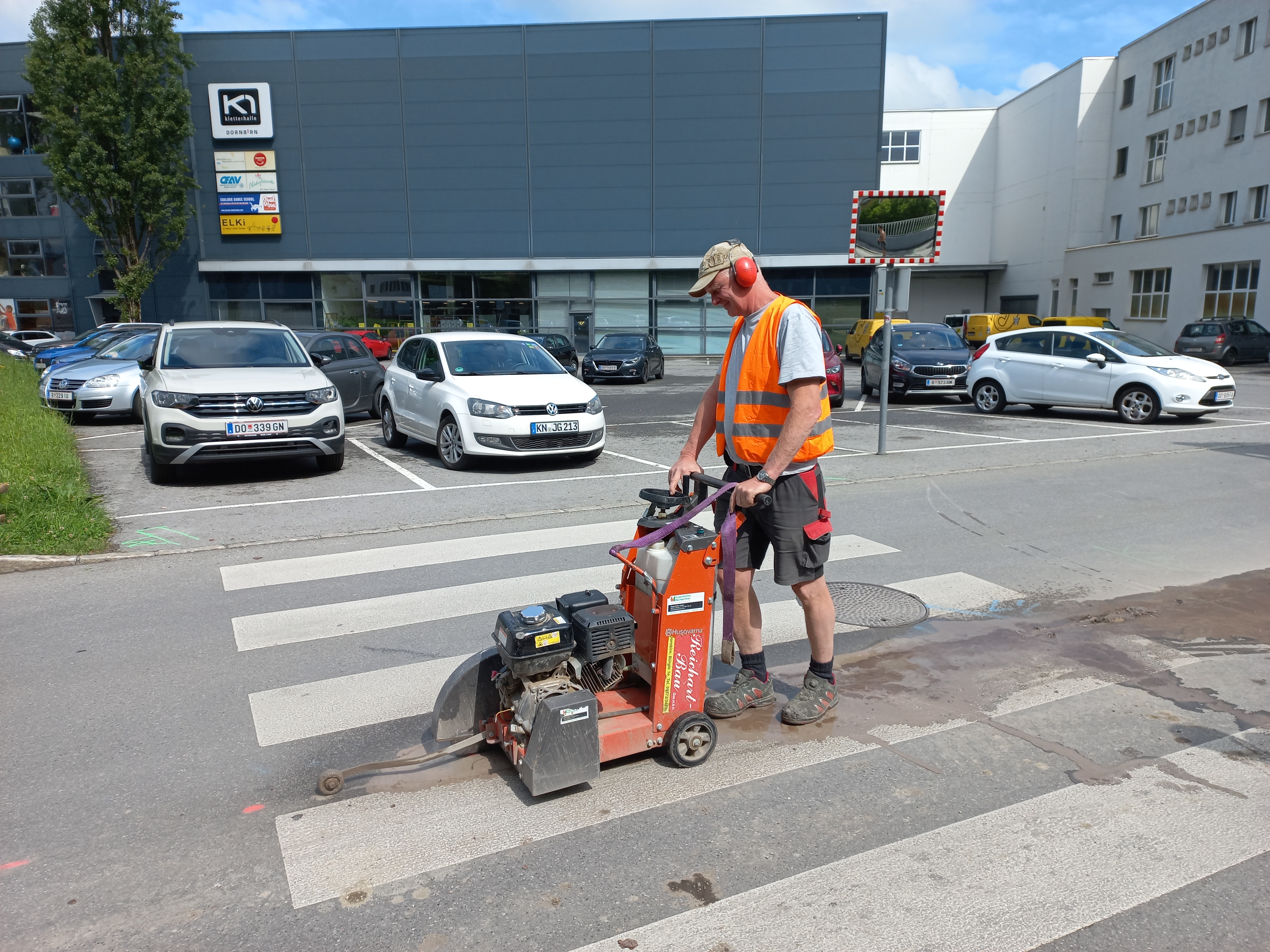




Photos via Wikimedia Commons (CC BY-SA / CC BY / CC0 / Public Domain): Maksym Kozlenko, Asurnipal, Geograph (Des Blenkinsopp), Oxyman, Brian Yap, Oshwah, U.S. Navy, NIOSH, Bidgee, Fumikas Sagisavas, Ben Kurtovic, Aethonatic, Anne Burgess, Donald Trung Quoc Don, Daderot.
Learn from Real Australian Incidents
These are real construction deaths and serious injuries in Australia. They are studied in every learner workbook on the subject because the lessons are specific, practical, and paid for in lives. Read each and ask yourself: what controls, if in place, would have prevented this?
Case 1 - Scaffold collapse, Macquarie Park NSW, 1 April 2019
What happened: An 18-year-old apprentice formworker, Christopher Cassaniti, died when a 15-metre steel scaffold collapsed on him while he was taking a break at the base of it. A second worker was seriously injured.
Why: The scaffold had been erected without proper ties back to the building, with missing components and inadequate engineering certification. Workers had raised concerns about its stability; these were not acted on.
Outcome: The principal contractor and the scaffolding subcontractor were each fined hundreds of thousands of dollars. Chris's mother has since campaigned for stronger industrial manslaughter laws.
White Card takeaway: (1) Scaffolding is high-risk construction work - a SWMS is mandatory. (2) Only competent, ticketed scaffolders may erect it; it must be tagged after inspection by a competent person. (3) If you have a safety concern, escalate it - raising it with a supervisor is your duty under WHS law.
Source: SafeWork NSW prosecution; Coroners Court NSW.
Case 2 - Crane collapse, Eagle Farm QLD, 10 October 2016
What happened: Two men (Humberto Leite and Olwyn Williams) died when a 160-tonne crawler crane buckled and collapsed during a lift at the Eagle Farm Racecourse construction site.
Why: The crane was performing a lift very close to its maximum capacity on ground that had not been properly assessed for bearing strength. The lift plan was inadequate, ground mats were insufficient, and the crane's computer was overridden.
Outcome: Fines totalling over $1 million; significant changes to QLD's crane and lift-study requirements.
White Card takeaway: (1) Establish and obey exclusion zones around lifting operations - no worker on foot should be under a suspended load. (2) Crane operations are HRCW; lift plans must be documented and followed. (3) Do not override safety interlocks on plant.
Source: WHSQ prosecution outcome; QLD Work Health and Safety Prosecutor published determinations.
Case 3 - Silicosis from engineered stone, nationally, 2018–2024
What happened: Hundreds of stonemasons in their 20s, 30s and 40s were diagnosed with accelerated silicosis after cutting engineered stone benchtops (up to 93% crystalline silica) dry, without water suppression or proper respiratory protection. Dozens have died or are awaiting lung transplants.
Why: Engineered stone exploded in popularity from the mid-2000s. Dry cutting produced respirable silica concentrations many hundred times the exposure standard. PPE and controls were inadequate, and the latency to accelerated silicosis is as short as 3–5 years (decades faster than traditional silicosis).
Outcome: Australia became the first country in the world to ban engineered stone, effective 1 July 2024 (imports, supply, manufacture and installation prohibited). Licensed work to decommission existing benchtops may continue under strict controls.
White Card takeaway: (1) Silica dust is invisible, odourless, and deadly. (2) Always use water suppression or on-tool extraction with H-class vacuums when cutting/grinding stone, concrete, brick or tile. (3) Wear at minimum a P2 respirator; for higher exposure, a P3 full-face or PAPR. (4) Get a chest check if you've worked with stone.
Case 4 - Trench collapse, Ballarat VIC, 21 March 2018
What happened: A worker was killed when the wall of a 2.5-metre-deep unshored trench collapsed on him while he was laying pipework.
Why: The trench exceeded 1.5 m (automatic HRCW) yet had no shoring, benching or battering. No SWMS had been prepared. The supervisor had direct-entered the trench alongside the worker.
Outcome: The company was prosecuted under the OHS Act 2004 (VIC) for failing to provide a safe system of work. Significant fine; the incident is a standard case study in VIC trenching training.
White Card takeaway: (1) Any trench or excavation deeper than 1.5 m is HRCW and requires a SWMS. (2) Controls: shoring (timber/hydraulic), benching (stepping the sides back), battering (sloping the sides), or trench shields. (3) Never enter an unshored excavation deeper than 1.5 m - it doesn't matter how briefly. Soil is heavier than it looks (a cubic metre weighs around 1.5 tonnes).
Source: WorkSafe Victoria prosecution outcome.
Industry statistics to anchor your risk awareness
- Construction is #3 industry for workplace fatalities in Australia (behind transport and agriculture). Around 20–35 workers are killed on Australian construction sites each year.
- The top five construction-fatality mechanisms, consistently, are: falls from heights, vehicle incidents (trucks/plant), being hit by a falling object, electrocution, and being trapped/crushed.
- For every workplace death, SWA research estimates roughly 30 serious injuries and many more near-misses. Near-miss reporting is where future deaths are prevented.
- Construction workers have the second-highest rate of suicide of any Australian industry. Mental health is a WHS issue; psychosocial hazards are now explicit in the model WHS Regs (2022 amendment).
Source: Safe Work Australia - Fatality Statistics; MATES in Construction.
Risk Assessment - Worked Example
A risk assessment evaluates each hazard on two axes: likelihood (how often it could happen) and consequence (how badly someone could be hurt). The product is the risk rating, which drives how urgently controls must be applied and how high on the hierarchy those controls must sit.
5×5 Risk Matrix
| Insignificant (minor first aid) |
Minor (medical treatment) |
Moderate (lost time injury) |
Major (serious injury / disability) |
Catastrophic (fatality / multiple) |
|
|---|---|---|---|---|---|
| Almost Certain | Medium | High | Extreme | Extreme | Extreme |
| Likely | Medium | High | High | Extreme | Extreme |
| Possible | Low | Medium | High | High | Extreme |
| Unlikely | Low | Low | Medium | High | High |
| Rare | Low | Low | Medium | Medium | High |
Action thresholds: Extreme - stop work, escalate immediately, requires senior management sign-off. High - controls before work begins, close monitoring. Medium - controls required, monitor. Low - manage through routine procedures.
Worked example - cutting concrete pavers on a footpath rebuild
- Identify the hazard: respirable crystalline silica dust from dry cutting.
- Pre-control risk: likelihood Almost Certain (dust is guaranteed without controls); consequence Catastrophic (silicosis, lung cancer, death). Rating: Extreme.
- Apply hierarchy of controls:
- Eliminate: Use pre-cut pavers - no cutting on site.
- Substitute: Use a non-silica paver where the specification allows.
- Isolate: Set up a dust-barrier enclosure; keep other workers well clear.
- Engineering: Wet cutting (water to the blade), or on-tool vacuum extraction with H-class HEPA.
- Administrative: Rotate workers to limit exposure time; cut at start of shift before site is populated; air monitoring.
- PPE: P2 respirator (fit-tested); P3 if air monitoring shows high concentrations; disposable coveralls; eye/face protection.
- Post-control risk: with wet cutting + P2 + rotation, likelihood Unlikely, consequence Major. Rating: High - still needs ongoing monitoring and an atmospheric check, but acceptable to proceed under a SWMS.
- Residual risk acceptance: the supervisor signs off the SWMS; each worker receives the brief; monitoring confirms controls are working.
This is the thinking pattern you must demonstrate under the CPCWHS1001 assessment's practical/scenario component - not just "name the hazard" but rank the risk, climb the hierarchy, and justify residual risk.
Anatomy of a Safe Work Method Statement (SWMS)
You will not write SWMS on a White Card - but you will be expected to read, understand and sign on to them every time you are assigned high-risk construction work. A SWMS is mandatory before ANY of the 19 HRCW categories begins. A template SWMS has the following mandatory sections:
- Project & site details - address, principal contractor, client, site supervisor, date, SWMS version number.
- Description of the HRCW - what high-risk activity is being performed (referencing one or more of the 19 categories).
- Workers & competencies - names, licences, tickets (White Card, HR, scaffolding, EWP, etc.), and evidence those are current.
- Step-by-step method - the task broken into sequential steps. This is the heart of the SWMS.
- Hazards for each step - what can go wrong at this step?
- Risk rating for each hazard - using a matrix like the one above, pre- and post-control.
- Control measures for each hazard - specifically mapping to the hierarchy of controls.
- PPE required - item by item, with the relevant Australian Standard.
- Plant, tools & materials - their pre-start inspection and isolation procedures.
- Emergency procedures - nearest first aid kit, muster point, evacuation route, emergency contacts, and any specific rescue plan (confined space, fall rescue).
- Training & induction evidence - that each worker has been briefed on this SWMS, signed, and dated.
- Review & revision - SWMS must be reviewed if conditions change, if a control fails, or after an incident. Version history tracked.
Your duties when a SWMS is in place:
- Read and understand the SWMS before the work starts.
- Ask questions if anything is unclear - before work begins, not after.
- Sign on to acknowledge that you have been briefed and understand it.
- Work in accordance with the SWMS. Deviation from the documented method is a breach of the WHS Regulations.
- If a control fails or conditions change, STOP and request SWMS review.
- Keep an eye on your workmates - if they're not following the SWMS, speak up.
A PCBU who allows HRCW to commence without a SWMS commits an offence. Workers who witness this are strongly encouraged to report to their HSR or the regulator (SafeWork in your state). You are protected against victimisation under the WHS Act when you raise safety concerns in good faith.
Lockout & Tagout (LOTO) - the 10-Step Procedure
Lockout/Tagout (LOTO) prevents stored or accidentally restored energy from injuring a worker during maintenance or inspection. It applies to electrical systems, hydraulics, pneumatics, chemical systems, gravity/mechanical (raised loads, springs), and thermal systems. Every Australian construction site uses LOTO.
- Prepare - Identify every energy source. Electrical supply, hydraulic lines, compressed air, stored energy in springs, capacitors, elevated loads, residual steam/chemical pressure. Missing one is the entire reason LOTO exists as a procedure.
- Notify everyone affected. Tell operators, adjacent crews, and the supervisor that the equipment is going out of service. Communicate the expected return-to-service time.
- Shut down normally. Follow the manufacturer's shutdown procedure (don't just hit the emergency stop unless there's an emergency - e-stops don't always isolate everything).
- Isolate every energy source. Switch off at the breaker/isolator, close valves, depressurise hydraulic and pneumatic systems, drain tanks, block elevated loads with jacks/stands.
- Lock out. Each worker who will be on the equipment applies their own personal padlock to each isolation point. One lock per worker, per isolation point. Use a lock-box or hasp if multiple workers are involved (group LOTO).
- Tag out. Attach a DANGER / DO NOT OPERATE tag to each isolation point. The tag must identify: who applied the lock, date, contact details.
- Release stored energy. Bleed pressure, discharge capacitors, lower raised components, drain reservoirs. Confirm by gauges and visual inspection.
- Test - "Try before you pry". Attempt to start the equipment using its normal start controls. Nothing should happen. Then check all moving parts and energised circuits with a meter. If anything responds, something's not isolated - go back to step 4.
- Perform the work. The locks stay on throughout. Under no circumstances does anyone else remove your lock.
- Restore service - in reverse. When work is complete: remove tools and return guards, check no one is still on the equipment, each worker removes their own lock, notify all affected personnel, then re-energise in the manufacturer's documented start-up sequence.
One worker, one lock, one key. Never remove another person's lock. Never lend your key. Never override a lock with bolt-cutters. If someone has left site with their lock still on, there is a formal lock-removal procedure that requires manager sign-off and confirmation the worker has actually left - not a shortcut, an investigation.
Key Sections of the WHS Act - What the Law Actually Says
These are the sections of the Model Work Health and Safety Act 2011 that you are expected to know the substance of. Quoted or paraphrased extracts follow, with plain-English explanation.
Section 19 - Primary Duty of Care
"A person conducting a business or undertaking must ensure, so far as is reasonably practicable, the health and safety of workers engaged, or caused to be engaged by the person, and workers whose activities in carrying out work are influenced or directed by the person, while the workers are at work in the business or undertaking."
Plain English: The PCBU has the top-line duty. It can't be delegated. It applies to every worker and other person (visitor, contractor, member of public) affected by the work. "Reasonably practicable" is defined in s.18: weigh likelihood, severity, what's known about the hazard, cost and availability of controls.
Section 28 - Duties of Workers
"While at work, a worker must: (a) take reasonable care for his or her own health and safety; (b) take reasonable care that his or her acts or omissions do not adversely affect the health and safety of other persons; (c) comply, so far as the worker is reasonably able, with any reasonable instruction given by the person conducting the business or undertaking; and (d) cooperate with any reasonable policy or procedure of the PCBU relating to health or safety at the workplace that has been notified to workers."
Plain English: Four duties on you. Look after yourself. Don't put others at risk. Follow reasonable instructions (e.g., site rules, SWMS). Cooperate with site procedures (like D&A testing, PPE rules, sign-in).
Section 84 - Right to Cease or Direct Cessation of Unsafe Work
"A worker may cease, or refuse to carry out, work if the worker has a reasonable concern that to carry out the work would expose the worker to a serious risk to the worker's health or safety, emanating from an immediate or imminent exposure to a hazard."
Plain English: You have a legal right to stop working if you reasonably believe the work would expose you to serious, imminent risk. You must notify the PCBU (supervisor) as soon as practicable. You cannot be disciplined, dismissed or penalised for exercising this right in good faith.
Section 104 - Prohibition of Discriminatory Conduct
A PCBU must not dismiss, demote, threaten or discriminate against a worker because the worker has raised a safety concern, is an HSR, or has assisted an inspector.
Plain English: If you report a hazard, elect as HSR, or talk to a SafeWork inspector - you are protected. Victimisation is a criminal offence.
Penalties - What's at Stake
Maximum penalties under the Model WHS Act vary by jurisdiction and were significantly increased nationally in 2023–24. Figures below are indicative current maxima; check your state's current WHS Act for the exact amount applicable in your jurisdiction.
| Category | Offence | Indicative maximum (individual / PCBU corporate) |
|---|---|---|
| Category 1 Reckless conduct | Without reasonable excuse, engaging in conduct that exposes a person to risk of death or serious injury, recklessly | Up to $1.16M and/or 5 years imprisonment (individual); up to $11.6M corporate (NSW figures - states vary) |
| Category 2 Failure to comply with risk exposure | Fails to comply with health-and-safety duty; failure exposes a person to risk of death or serious injury | Up to ~$580k individual / ~$5.8M corporate |
| Category 3 Failure to comply | Fails to comply with a health-and-safety duty (no exposure required) | Up to ~$190k individual / ~$1.9M corporate |
| Industrial manslaughter Separate offence in some states | Gross negligence causing the death of a worker |
QLD: 20 yrs (individual) / $20M (corporate) VIC: 25 yrs / $19.97M NSW: 25 yrs / $20M (commenced 2024) ACT: 20 yrs / $16.5M WA: 20 yrs / $10M (under WHS Act 2020) NT: Life (individual) / $10.2M SA: 20 yrs / $18M (commenced 2024) TAS: No standalone offence; prosecuted as Cat 1 + manslaughter under criminal law |
All states have raised maximum penalties in 2023–24 as part of national reform. Penalty units (used in some Acts) are also periodically indexed. The figures above are based on each state's current Act (as of 2024–25) and may have been updated since publication. Always check current legislation via the state regulator (SafeWork NSW, WorkSafe VIC, WHSQ, WorkSafe WA, SafeWork SA, WorkSafe TAS, NT WorkSafe, WorkSafe ACT).
Hazard Identification Self-Check
Real learner workbooks run self-check exercises like this - you describe a scenario, then the learner lists the hazards and their controls. Try each one yourself before reading the model answer.
Scenario 1: You arrive on a residential extension. The electrician is cutting through a wall with an angle grinder. Dust is flying; extension leads run across the lawn; a ladder leans against the gutter. What hazards do you see?
Model answer:
- Silica dust from grinding plaster/masonry - no water suppression, no dust extraction, no visible respirator. Control: stop the work, use water or on-tool vacuum, P2 respirator minimum.
- Potential asbestos if the house is pre-2003 (likely in an extension). Control: check asbestos register before any cutting; test suspect material; stop if unknown.
- Electrical leads across lawn - trip hazard, potential damage if mowed or caught, moisture risk. Control: RCDs (30 mA), elevated cable runs, inspect test/tag status.
- Ladder against gutter - angle not stated (should be 1:4), not tied off, possibly reaching beyond safe height. Control: inspect, tie off, or use a platform ladder.
- No exclusion zone around the grinding work - others can walk into flying debris. Control: barricades, signage.
- No SWMS visible - if silica cutting or electrical work on a live circuit, HRCW applies. Control: SWMS and briefing.
Scenario 2: On a high-rise site, a dogger is guiding a load of rebar being hoisted by a tower crane. Below, workers are pouring a slab. Deliveries arrive at the gate. A thunderstorm is building. What are the hazards and who needs to do what?
Model answer:
- Load over workers - never. Exclusion zone below any suspended load; work stops or relocates.
- Lightning - crane operations must stop when lightning is within ~10 km; concrete pours are also affected. Supervisor has authority to call a stop.
- Traffic management at the gate - trucks and pedestrians must be separated; spotters required; speed limits on site.
- Wet concrete - causes severe chemical burns; PPE (gloves, long sleeves, eye protection); wash-off points.
- Reinforcement steel ends - puncture/impalement; plastic caps or timber planks over projecting bars.
- Communications - dogger and crane operator on dedicated UHF; no phones or distractions.
Scenario 3: You're the first person to arrive at an incident - a labourer has fallen from a mobile scaffold, about 3 m, and is lying motionless on the slab. What do you do, step by step?
Model answer (DRSABCD + site procedure):
- Danger - check for ongoing hazards (unstable scaffold, live electrical, other workers still on elevated plant). Don't become casualty #2.
- Response - call to the person (loudly), squeeze shoulders - do not move them (suspected spinal injury).
- Send for help - call 000 AND the site's first aid officer / supervisor via UHF or a runner. Give the gate address, sub-location on site, and nature of injury.
- Airway - if they are unconscious but breathing, keep the airway open with a gentle jaw thrust (not a head-tilt if spinal injury suspected).
- Breathing - look, listen, feel for 10 seconds.
- CPR - if not breathing: 30 chest compressions, 2 rescue breaths, repeat. 100–120 per minute. Swap with another first aider every ~2 minutes to avoid fatigue.
- Defibrillation - attach an AED as soon as it arrives; follow its voice prompts.
- Preserve the scene - do not move equipment, do not clean up. The regulator will investigate. Exception: moving equipment is allowed if strictly necessary to assist the injured person or remove a live danger.
- Notify the regulator (PCBU's duty) - a fall from height causing serious injury is a notifiable incident; SafeWork must be notified immediately.
- Support workmates - witnessing a serious injury is traumatic. Site must offer EAP / peer support. MATES in Construction is a 24/7 line: 1300 642 111.
Glossary & Acronym Dictionary
Australian construction is acronym-heavy. These are the terms you must know for the White Card assessment and will hear daily on site.
| Term | Meaning |
|---|---|
| ACM | Asbestos-Containing Material |
| AED | Automated External Defibrillator - delivers a controlled shock to restart the heart. |
| AFFF | Aqueous Film-Forming Foam - fire extinguisher type for Class A/B fires. |
| ASQA | Australian Skills Quality Authority - national VET regulator (RTOs). |
| BAC | Blood Alcohol Concentration. |
| CPCWHS1001 | The unit of competency that underpins the White Card. |
| CoP | Code of Practice - statutory guidance published by Safe Work Australia, admissible as evidence of what is reasonably practicable. |
| DRSABCD | Danger, Response, Send for help, Airway, Breathing, CPR, Defibrillation - the first-aid primary survey sequence. |
| EWP | Elevated Work Platform - scissor lift, boom lift, cherry picker. Separate High-Risk Work Licence. |
| GHS | Globally Harmonised System - chemical hazard classification and labelling. |
| HRCW | High-Risk Construction Work (the 19 categories). |
| HRWL | High-Risk Work Licence - separate tickets for scaffolding, dogging, rigging, crane operation, EWP, etc. |
| HSR | Health and Safety Representative - elected by a work group; may issue PINs. |
| LOTO | Lockout/Tagout - energy isolation and verification procedure. |
| OHS | Occupational Health and Safety - term used in Victoria (OHS Act 2004) and historically before WHS harmonisation. |
| PCBU | Person Conducting a Business or Undertaking - the duty-holder. |
| PIN | Provisional Improvement Notice - issued by a trained HSR requiring remedy of a suspected contravention. |
| PPE | Personal Protective Equipment. |
| PTW | Permit to Work - authorisation for high-risk activities like hot work, confined space, excavation. |
| RCD | Residual Current Device - cuts power on earth-fault within milliseconds. |
| RTO | Registered Training Organisation - the body that issues the actual White Card after assessment. |
| SDS | Safety Data Sheet - 16-section document for every hazardous chemical. |
| SWA | Safe Work Australia - national policy body; publishes model laws and codes. |
| SWMS | Safe Work Method Statement - mandatory for all HRCW. |
| TILE | Task, Individual, Load, Environment - manual handling assessment framework. |
| TWA | Time-Weighted Average - exposure averaged over 8 hours; used in chemical and noise standards. |
| UHF | Ultra High Frequency (radio) - standard site comms; Ch 5 is reserved for emergency nationally. |
| VET | Vocational Education and Training. |
| WES | Workplace Exposure Standard - legally enforceable concentration limit for an airborne chemical. |
| WHS | Work Health and Safety - post-2011 harmonised term (WHS Act 2011). |
| WRC | Worker's compensation (also WorkCover depending on state). |
Scenario Library - 12 Worked CPCWHS1001 Practical Scenarios
The CPCWHS1001 practical assessment uses scenario-based questioning. The 12 scenarios below mirror the style and difficulty of the real practical. Read each carefully, decide what you would do, then check the model answer.
Scenario 1. You arrive at a site for the first time. The supervisor says "I'll skip the induction today, just keep your head down." What do you do?
Scenario 2. Your hard hat just took a glancing blow from a dropped tool from above. There's no visible damage. The shift's halfway through. Do you keep wearing it?
Scenario 3. The site's only fire extinguisher in the area has missing inspection tags and looks rusty. A grinder operator nearby is throwing sparks toward stacked timber.
Scenario 4. You're cutting concrete pavers. There's a hose nearby. The site supervisor tells you to skip the water suppression "to save time" because the pavers are small.
Scenario 5. You're working on an unprotected slab edge at 3 m above ground. There's no handrail or fall arrest. The supervisor says "just be careful."
Scenario 6. A truck driver delivers steel reinforcement and parks the truck under a live overhead powerline. The crane is about to lift.
Scenario 7. Drilling into a wall in a 1985-built renovation. You disturb material that crumbles into white-grey dust. What do you do?
Scenario 8. A workmate seems out of it - slurred speech, smells of alcohol. They're about to operate a forklift.
Scenario 9. Trench needs deepening to 1.7 m for plumbing connections. The pile of earth is right at the edge of the trench. There's no shoring on site.
Scenario 10. A workmate seems quiet, irritable, made a near-miss yesterday. They tell you "I'm fine, just tired" but you're worried.
Scenario 11. An electrical lead has a damaged plug and the test/tag sticker is from 2 years ago. The site has wet ground from rain.
Scenario 12. You witness a workmate fall ~2 m off scaffolding. They are unconscious and bleeding from the head.
Mental Health & Worker Support - the Construction Industry Crisis
Construction has the second-highest suicide rate of any Australian industry - behind only mining. A construction worker is more likely to die by suicide than by an on-site accident. The 2022 amendments to the model WHS Regulations made psychosocial hazards explicitly part of WHS law: stress, fatigue, bullying, isolation, exposure to traumatic incidents are all now formal duties of care for the PCBU, alongside physical hazards.
Why construction in particular?
- Long hours, fly-in-fly-out - isolation from family, irregular sleep, unstable rosters
- "Hard man" culture - reluctance to seek help; stoicism rewarded; vulnerability stigmatised
- Project-cycle insecurity - subcontractor employment, between-jobs financial stress
- High-pressure deadlines - chronic stress, pressure to take shortcuts
- Witness trauma - exposure to serious workplace incidents and fatalities
- Substance use - higher-than-average alcohol use historically; drug use
- Family disruption - breakdowns of relationships from absence
Recognising distress - in yourself and workmates
- Persistent low mood, withdrawal, irritability
- Sleep disturbance; fatigue not relieved by rest
- Increased alcohol or drug use
- Reduced concentration, near-misses, uncharacteristic mistakes at work
- Loss of interest in normally enjoyed activities
- Self-isolation from family, friends, workmates
- Talk of hopelessness, being a burden, "everyone better off without me"
- Reckless behaviour, increased risk-taking
- Giving away prized possessions
Support resources (Australian)
| Service | Contact | What it's for |
|---|---|---|
| MATES in Construction | 1300 642 111 | 24/7 industry-specific peer support - built BY construction workers FOR construction workers |
| Lifeline | 13 11 14 | 24/7 crisis support & suicide prevention - for ANY level of distress |
| Beyond Blue | 1300 22 4636 | 24/7 mental health support & information |
| 13YARN | 13 92 76 | Aboriginal & Torres Strait Islander 24/7 crisis support |
| Suicide Call Back Service | 1300 659 467 | For people thinking about suicide or who have lost someone |
| Your employer's EAP | (varies - obtain at induction) | Free, confidential counselling for you and your immediate family |
| 1800RESPECT | 1800 737 732 | 24/7 domestic / family / sexual violence counselling |
| Headspace | 1800 650 890 | For workers aged 12–25 |
If a workmate is in crisis
- Ask directly. "Are you thinking of ending your life?" The evidence is unambiguous - asking does NOT put the idea in someone's head; it gives them permission to speak.
- Listen without judgement. Don't try to fix. Just be present.
- Connect them to help. MATES 1300 642 111 or Lifeline 13 11 14. Stay with them while they call.
- Stay with them or arrange a stay-with until professional help is in place. Don't leave a person in active crisis alone.
- If immediate danger - call 000.
- Look after yourself. Supporting someone in crisis is also draining. Use EAP or MATES yourself for debrief.
MATES in Construction is a peer-led suicide-prevention program embedded in the Australian construction industry. They train workers as "Connectors" who can have these conversations on site. If your site has MATES Connectors, find out who they are at induction.
Work-Type Specific Procedures
Each construction trade has its own dominant hazards and specific controls. The CPCWHS1001 covers universal principles - on-site you apply them differently depending on the work. Below is awareness-level coverage of the most common types.
Concreting / formwork
Hazards: wet concrete (chemical burns), heavy slab forms, falls from formwork, pump line whip, MSI from manual screeding, silica from dry cutting. Controls: long-sleeve PPE + nitrile gloves + face shield against splash, fall protection on raised forms, formwork engineer signoff before pour, never stand under suspended pump line.
Bricklaying
Hazards: repetitive MSI (back, shoulders, wrists), silica dust from cutting bricks, mortar chemical burns, falls from raised platform/scaffold, dropped tools. Controls: manual handling rotation (no more than X bricks per shift), wet-cutting saws, gloves, edge protection on raised work, toeboards on scaffold to stop dropped objects.
Plumbing & drainage
Hazards: trenching (HRCW >1.5 m), confined-space entry (manholes, septic tanks - HRCW), hot work (soldering, oxy), legacy asbestos lagging on old pipes, lead from old solder, sharps in old systems. Controls: shoring, confined-space entry permit + atmospheric testing, hot-work permit, asbestos register check before disturbing pipes pre-1990.
Electrical work
Hazards: electrocution, arc flash, falls from height (ceiling work, OHL), live work, cable strike during digging. Controls: ONLY licensed electricians may perform electrical work; isolate, lock-out, test for dead before touching; RCDs on all portable equipment; double insulation on tools; Dial Before You Dig 1100 before any excavation.
Roofing
Hazards: falls (the #1 fatal hazard category), heat stress, UV exposure, brittle roof sheeting (legacy fibro), broken skylights, dropped objects, wind load on sheeting being moved. Controls: roof edge protection or fall arrest harness; brittle-roof procedures; no roof work in winds >40 km/h; skylight covers; SPF 50+ + broad brim; hydration breaks.
Demolition
Hazards: structural collapse, asbestos (almost guaranteed in pre-2003 buildings), lead paint, falls, dust (silica + general), hidden services. Controls: hazardous materials assessment + asbestos report BEFORE demolition; sequence demolition top-down; isolate utilities; site-wide exclusion zone; air-monitoring; H-class HEPA cleanup. Demolition is HRCW.
Steel fixing / reinforcement
Hazards: impalement on protruding bars, MSI from heavy bars, sharp edges, falls into pre-formed slabs. Controls: rebar safety caps on all protruding ends, mechanical lifting for >25 kg bars, leather gloves, edge protection on slab voids/penetrations.
Permit-to-Work (PTW) Systems
A Permit-to-Work is a formal written authorisation that work can begin under specified conditions. PTWs are used for high-risk activities where uncontrolled work could be catastrophic. Different sites use different permit names but the four main categories are universal.
The 4 standard permits
| Permit | For | Triggers | Key controls |
|---|---|---|---|
| Hot Work Permit | Welding, oxy-cutting, grinding, gas-axe, soldering near combustibles | Any spark/flame-producing work in a non-designated hot-work area, or near flammables | Fire watch (during + 30 min after), extinguisher ready, area cleared 11 m of combustibles, isolate gas |
| Confined Space Entry Permit | Manholes, tanks, vessels, ducts, pits - anywhere "not designed for human occupancy" with restricted entry/exit | Any entry to a confined space, full stop | Atmospheric testing (O⊂2 19.5–23.5%, LEL, toxics), stand-by person outside, rescue plan, communications |
| Excavation Permit | Any digging that could strike services, undermine structures, or exceed depth limits | Excavation >1.5 m, near services, near foundations, near boundaries | Dial Before You Dig 1100 confirmation, hand-dig last 500 mm near services, shoring/benching/battering above 1.5 m |
| Working at Heights Permit | Any work above 2 m where edge protection is not in place | Roof work, window cleaning external, fall-arrest reliance, inadequate scaffold | Rated anchor points, harness inspection, second person to monitor, rescue plan if suspended |
Anatomy of a permit
- Permit number + date + work location - unique identifier
- Description of work - what exactly is being done
- Workers authorised - named individuals + competencies
- Hazards identified - specific to the task
- Controls in place - for each hazard
- Atmospheric tests / pre-checks - for confined space, hot work etc.
- Equipment required - specific PPE, tools, rescue gear
- Communication plan - how workers stay in contact
- Emergency response - what happens if controls fail
- Time window - when permit is valid (often shift-bound; expires at end of shift)
- Issuer's signature - competent supervisor
- Worker acknowledgement signatures
- Sign-off / closure - at end of work; permit returned
Permits are NOT optional paperwork. A worker who enters a confined space without a permit (or its controls), or hot-works without a fire watch, is breaching the WHS Act - and risking their life. If you don't have a permit for an activity that requires one, stop and ask.
Reference Appendices - Evidence Record & Lesson Plan
Appendix A - Trainee Evidence Record (CPCWHS1001 practical assessment)
Trainee: __________________ USI: _____________ Date: ___________
Assessor: __________________ Provider code: ________
Unit: CPCWHS1001 - Work Safely in the Construction Industry
Assessment criteria - Practical demonstration:
| Criterion | C / NYC |
|---|---|
| 1. Correctly fits a hard hat and demonstrates fit-check | ☐ ☐ |
| 2. Selects appropriate PPE for a described scenario | ☐ ☐ |
| 3. Identifies hazards in a simulated site walk-through | ☐ ☐ |
| 4. Completes a hazard identification form | ☐ ☐ |
| 5. Identifies all 5 AS 1319 sign categories from photographs | ☐ ☐ |
| 6. Locates / identifies fire extinguisher types and explains when each is used | ☐ ☐ |
| 7. Demonstrates DRSABCD on a manikin or describes verbally | ☐ ☐ |
| 8. Describes the hierarchy of controls and applies it to a hazard | ☐ ☐ |
| 9. Identifies what constitutes a notifiable incident | ☐ ☐ |
| 10. Describes correct emergency response for: fire / serious injury / electrical | ☐ ☐ |
| 11. Knows BAC limit, fitness for work, and self-reporting duties | ☐ ☐ |
Outcome: ☐ Competent ☐ Not Yet Competent (re-assessment required)
Trainee signature: _______________________
Assessor signature: _______________________
Records retained for the duration of competency currency plus 5 years (per training-package requirements).
Appendix B - Suggested 6-hour course delivery sequence
| Time | Module | Method |
|---|---|---|
| 08:30 – 09:00 | Welcome, sign-on, USI verification, baseline knowledge check | Classroom |
| 09:00 – 09:45 | WHS legislation, duty holders, primary duty of care | Lecture + WHS Act extracts |
| 09:45 – 10:30 | Hazard identification & risk management; hierarchy of controls; SWMS introduction | Lecture + risk matrix exercise |
| 10:30 – 10:45 | Break | - |
| 10:45 – 11:30 | The 19 HRCW categories; SWMS anatomy walk-through | Lecture + sample SWMS review |
| 11:30 – 12:15 | PPE: types, standards, fitting, maintenance - HARD-HAT FIT CHECK practical | Practical demonstration |
| 12:15 – 13:00 | Lunch | - |
| 13:00 – 13:45 | Construction hazards in detail: heights, electrical, silica, asbestos, plant, manual handling | Lecture + photo case studies |
| 13:45 – 14:30 | Site procedures: induction, exclusion zones, LOTO, Dial Before You Dig, signs (AS 1319) | Lecture + sign-recognition exercise |
| 14:30 – 14:45 | Break | - |
| 14:45 – 15:30 | Notifiable incidents, reporting, emergency response, fire extinguishers (PASS), DRSABCD | Discussion + first-aid demo |
| 15:30 – 16:00 | Real Australian incidents case studies; mental health resources (MATES) | Group discussion |
| 16:00 – 16:45 | Knowledge assessment (40 MC, ~80% pass mark) | Invigilated |
| 16:45 – 17:15 | Practical demonstration - PPE fit, signage ID, scenario response, hazard form completion | Direct observation (Appendix A) |
| 17:15 – 17:30 | Feedback, results, sign-off, follow-up actions | One-on-one |
Total contact: ~7.5 hours (within the Safe Work Australia minimum of 6 hours of training delivery). Allow extra time for cohorts with English-as-second-language or where trade prior experience is absent.
Appendix C - References, standards & further reading
- Legislation: Model Work Health and Safety Act 2011 (and state-adopting Acts - see your state profile above); OHS Act 2004 (Vic); WHS Act 2020 (WA).
- Unit: training.gov.au - CPCWHS1001
- Code of Practice: Construction Work (SWA)
- Australian Standards: AS 1319 (signs), AS/NZS 1801 (hard hats), AS/NZS 1841 (extinguishers), AS/NZS 4602.1 (hi-vis), AS/NZS 1891 (fall-arrest), AS/NZS 1270 (hearing), AS/NZS 1715/1716 (RPE), AS 4760 (saliva D&A), AS/NZS 4994 (edge protection).
- Regulators: SafeWork NSW; WorkSafe VIC; WHSQ; SafeWork SA; WorkSafe WA; WorkSafe TAS; NT WorkSafe; WorkSafe ACT.
- National bodies: Safe Work Australia (model law); ASQA (training); ASSEA (asbestos & silica).
- Mental health: MATES in Construction; Lifeline; Beyond Blue; 13YARN.
- Investigation framework: Reason, J. - Managing the Risks of Organizational Accidents; Dekker, S. - The Field Guide to Understanding 'Human Error'.
Appendix D - Emergency contact list (verify at every site)
- Emergency: 000
- Dial Before You Dig: 1100 (or via the Before You Dig app)
- Lifeline: 13 11 14
- MATES in Construction: 1300 642 111
- Beyond Blue: 1300 22 4636
- Poisons Information: 13 11 26
- State WHS regulator notification: NSW 13 10 50 / VIC 13 23 60 / QLD 1300 362 128 / SA 1300 365 255 / WA 1300 307 877 / TAS 1300 366 322 / ACT 13 22 81 / NT 1800 019 115
How to Use This Study Resource
This site condenses the eight CPCWHS1001 study modules into a free, self-paced resource. The full real assessment combines a written knowledge test with a practical PPE demonstration. This site covers the knowledge half in depth and gives you a practice exam that mirrors the real format.
Recommended study path
- Read the eight modules in order - allow ~6 hours total in one or several sittings.
- Pay particular attention to the 19 high-risk construction work categories, the hierarchy of controls, and the Key Numbers cheat sheet.
- Read the four case studies - real Australian fatalities and the lessons they taught the industry.
- Try the 39-question practice exam in Study Mode first (instant feedback after every question).
- When you can score consistently above 90% in study mode, switch to Exam Mode to time yourself under real conditions (60 min, no feedback until submit).
- Use the topic-by-topic breakdown on the results page to identify weak areas and re-read those modules.
What this site does NOT cover
This is a knowledge-only study resource. The full White Card requires a practical demonstration of correctly fitting PPE, identifying hazards in a simulated site, and completing a hazard form. That practical component is performed in person and assessed by a competent assessor - it is not something a website can deliver. Use this site to master the theory; complete the practical separately.
Refresher use
The White Card has no legislated expiry, but the underlying laws and codes change. This resource is freely available as often as you want as a refresher - especially after a long break from construction work, after major regulatory updates, or before a return-to-site after time away.
State and Territory Recognition
The White Card is mutually recognised between states under the national VET framework - a card issued in one state is accepted on construction sites nationwide. The card itself looks slightly different in each state but the underlying competency (CPCWHS1001) is the same. Below are the regulators in each jurisdiction and the local card name.
| State / Territory | Regulator | Local card name & notes |
|---|---|---|
| New South Wales | SafeWork NSW | General Construction Induction Card (white plastic). |
| Victoria | WorkSafe Victoria | Construction Induction Card under OHS Act 2004 / OHS Regulations 2017. Mutual recognition with interstate cards applies. |
| Queensland | Workplace Health & Safety Queensland | General Construction Induction Card. Card typically posted within ~60 days of completion. |
| Western Australia | WorkSafe WA | WA Construction Induction Card - issued separately via the WorkSafe WA portal. Operates under the Work Health and Safety Act 2020. |
| South Australia | SafeWork SA | General Construction Induction Card. |
| Tasmania | WorkSafe Tasmania | General Construction Induction Card. |
| ACT | WorkSafe ACT | General Construction Induction Card. ACT follows the national WHS model law. |
| Northern Territory | NT WorkSafe | General Construction Induction Card. Mutual recognition with interstate cards applies. |
Source: state/territory WHS regulator guidance as of 2025. State regulators publish lists of approved providers in each jurisdiction.
Official Resources & Verified References
All factual claims on this page are drawn from Australian Government, Safe Work Australia, state WHS regulators, and the national VET register. Use these primary sources to verify anything you read here - and as study material to supplement your course.

What the card looks like
The General Construction Induction Card is a white plastic (credit-card-sized) ID showing your name, unique card number, the issuing provider's code, and the date of issue. The physical card typically takes up to 60 days to post; your Statement of Attainment for CPCWHS1001 is your temporary proof of competency in the interim.
Practice Quiz - White Card (CPCWHS1001)
Built around the published CPCWHS1001 - Work Safely in the Construction Industry structure. The unit has four elements: (1) WHS legislation & duty holders, (2) hazards, risk management & PPE, (3) communication, signs & reporting, (4) incident & emergency response. Real assessments typically run ~40–50 mixed-format items, ~80% pass mark, ~45–60 minutes, alongside a separate practical demonstration. This 39-question quiz follows the published topic weighting: ~15% law / ~35% hazards+PPE / ~25% signs+communication+reporting / ~25% incidents+emergency+fire.
Sources: training.gov.au - CPCWHS1001 R2, Safe Work Australia - White Card guidance material.